Double-edged sword

57-04-april-27th-2014

“Father would want us to carry on, Philomena. You know he would.” I rolled up my sleeves as I spoke, adjusting the black armband. We had no money for full mourning outfits.

“You are a cold-hearted fish – shame on you!”

“The field will not plough itself. Father and Jem are – gone. We have to survive on our own now.”

We faced each other, hands on hips, both insistent that we were right. Stubborn as Father, I thought.

Major whickered impatiently in the background. He wanted to work too, and the brassware and buckles jangled as he strained his harness against the weight of the plough. I pictured Jem rubbing Major’s nose softly on the day he and Father left. It had been a lifetime ago, or so it seemed.

“Philomena! Louisa! Please read this, for I cannot!”

We both turned, our impasse forgotten. Mother was running across the field, hair falling loose from its pins, skirts held high above the mud. She waved a piece of paper, shining white against the grey sky.

‘REFUSED PASSAGE <STOP> TITANIC TICKETS SOLD TWICE <STOP> BOTH ARE SAFE <STOP> RETURNING ON SOUTHAMPTON TRAIN SOONEST <STOP> LOVE TO ALL FATHER <STOP>’

————–
It’s been a while, but I thought I should pop my head around the door of Alistair’s Sunday Photo Fiction and get creative in a non-poetic way. The story came to my head quite quickly, once again inspired by family history talk last weekend. There were lots of agricultural labourers in my family background before the industrial revolution took hold. Yes, there was a lucky incident of being the victim of double-booking on third class passage on the Titanic.  A very lucky escape indeed…

Do take part if you have time, or just pop over and read the other entries!

Gas Street Basin

Bypasses and ringroads

motorbikes and cars

modern modes of transport

leave their gaping scars upon this land

so green and pleasant,

we yearn for times gone by

but gazing at the narrow-boat

I wonder if our eye has rose-tinted

our view of the water-born

workhorse, now driven for pleasure

coal-carrying forgotten as we

pursue times of leisure and joy.

The canals were our highways,

industry was fuelled by these watery

paths – fumes, dust and noise

clogging the arteries of England’s

long spine.

———–

This week on dVerse Poetics, Shanyn would like us to write about the rhythm of transport. This long weekend, I have been staying with my family who hail from what southerners in England refer to as The North. Well, I was born and brought up in the West Midlands, which is hardly The North, but we do have a lot of industrial history of which to be proud!

Apparently, my birth city of Birmingham has more canals than Venice, and they were used for commerce in support of the the Industrial Revolution. I imagine that they were dusty, noisy, smelly and very, very busy. Traffic jams of narrowboats would have been commonplace, especially in places such as Tardebigge, which has a flight of  30 locks. Taking a boat through a lock system is not to be taken lightly! These days, the canals are used for pleasure, and I think many people tend to to forget that they were the motorways of their day. So, this was my inspiration! Oh, and Gas Street Basin is where a number of canal systems meet in the centre of Birmingham – very pretty now, not so lovely back in the times when it was a working hub of the canal system.

I hope you enjoy this – please pop over to dVerse to see how my fellow poets have been inspired!

Blueprint – Friday Fictioneers

Here is my late entry into the weekly challenge brought to us by the lovely Rochelle Wisoff-Fields.

Here are the rules: Use the photo as inspiration, write a hundred(ish) words – and share! Here goes my offering for this week – and I welcome your comments again!

old-building-staircase

Copyright – Rochelle!

– Blueprint –

Of course, they thought of it as a cruel and unusual punishment, something in which they had delighted since 1933.

Hire a Jewish architect to draw up the plans, engage a firm of Jewish builders, take on Jewish craftsmen. Everyone knew the purpose behind the building – it was the Nazi regime’s pride and joy.

The HQ of the Third Reich’s railway system was a grand affair. The hub of their efficient cargo transportation across the continent of Europe, Poland a special destination.

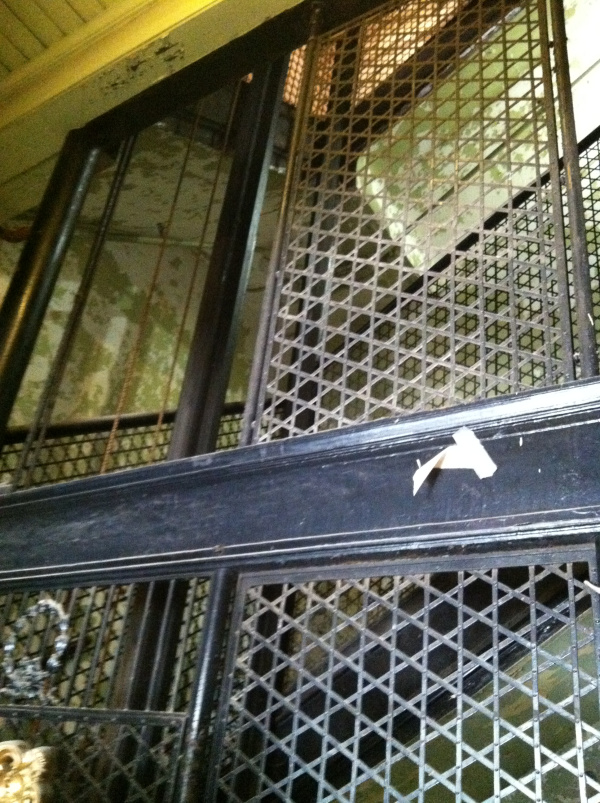
The workers were just grey, miserable, expendable creatures. The grill pattern in the stairwell, their final, finishing touch…

—-

Click on the blue froggy below to read others’ offerings!
